
Handing an employee the keys feels routine. It stops feeling routine the day there’s an accident and the person behind the wheel never should have been driving.
When that happens, the claim doesn’t stay with the driver. It comes back to the business that owns the vehicle. That’s why every business with company vehicles needs a written company vehicle policy that spells out exactly who may drive, and under what conditions.
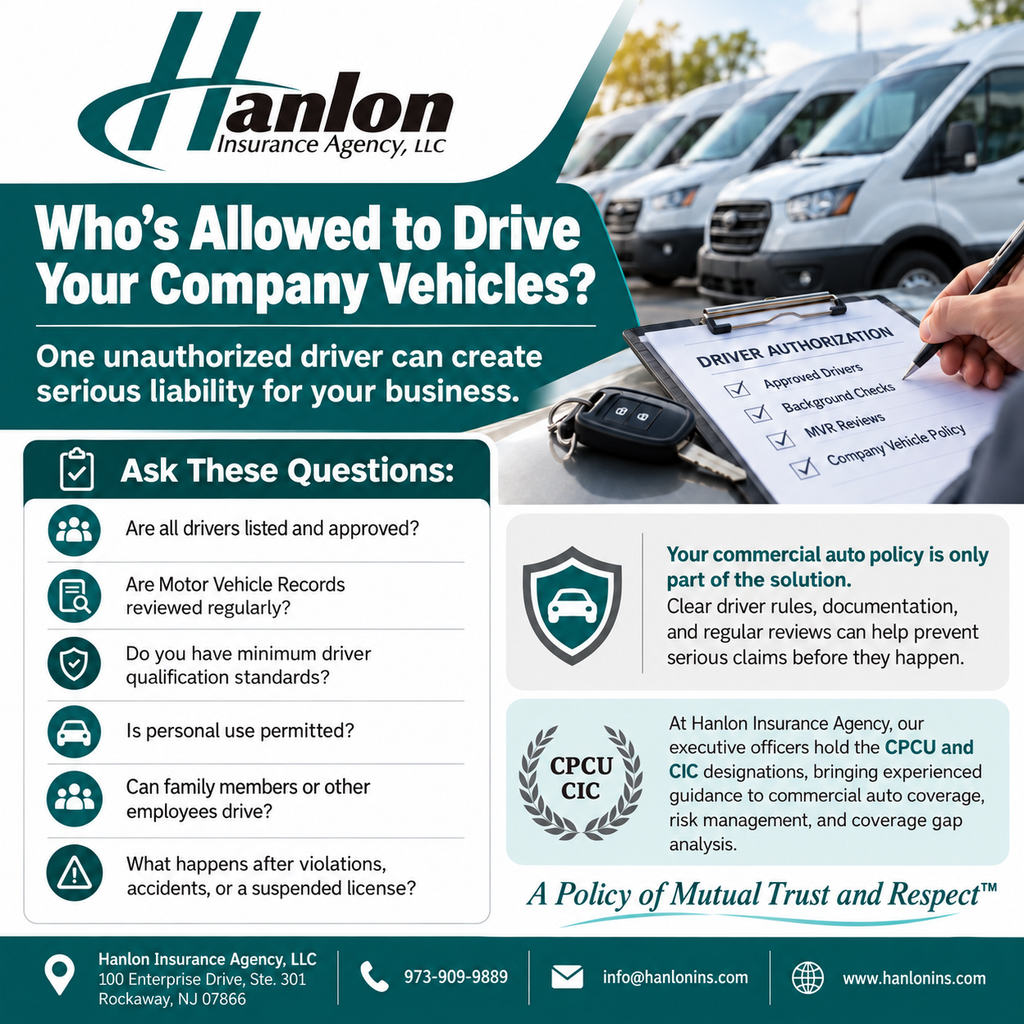
Why “Who’s Driving” Matters So Much
Most business auto policies cover more than the drivers you list. Anyone driving a covered vehicle with your permission is generally treated as an insured. In one sense that’s good news. It also means your policy, your loss history, and your business are on the line every time someone drives with your okay, whether or not you ever checked their record.
After a serious accident, attorneys look past the driver to the company. Two claims come up again and again:
- Negligent entrustment: the business let someone drive who it knew, or should have known, was unsafe.
- Negligent hiring or retention: the business hired or kept a driver despite warning signs, such as a poor driving record.
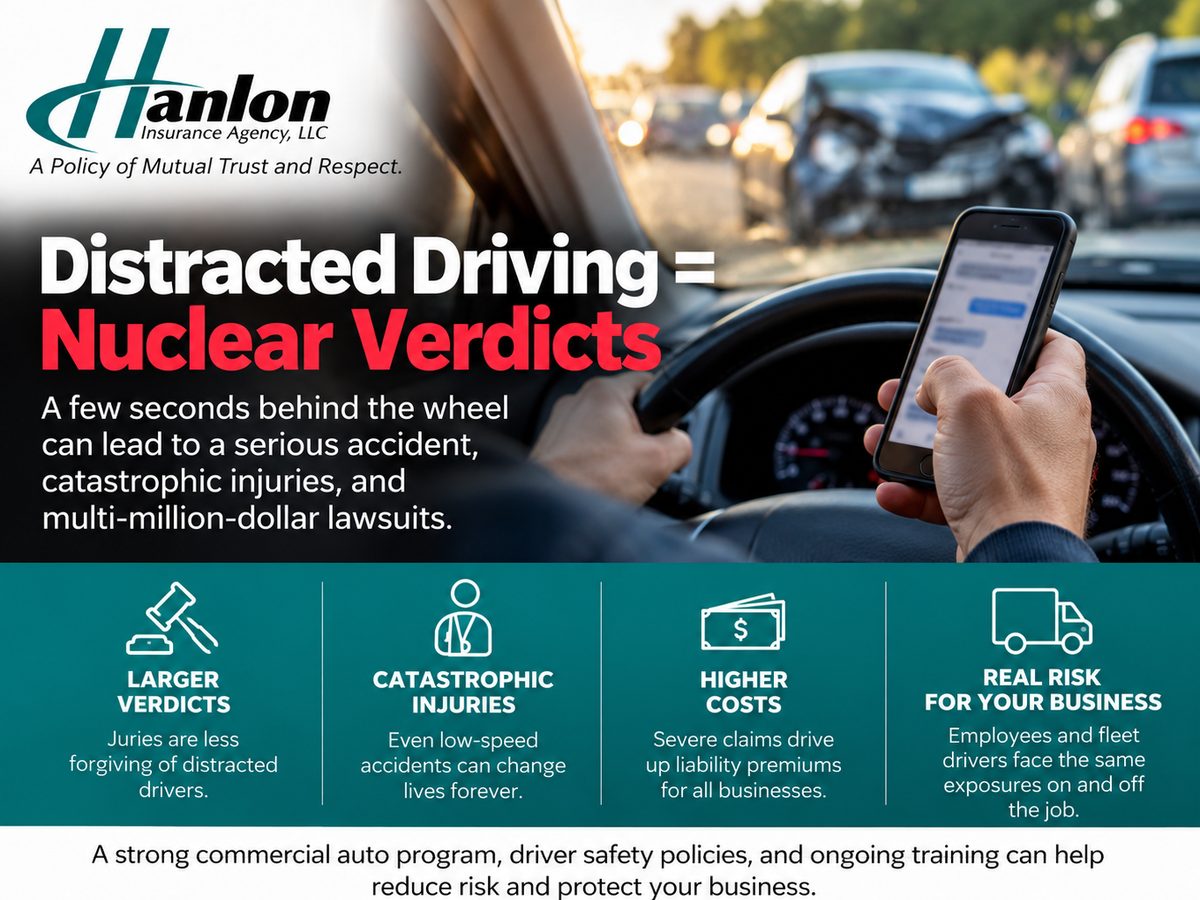
Both turn on the same question: what did you know, and what did you do about it? A documented company vehicle policy is how you answer it. Last week we looked at how distracted driving can lead to nuclear verdicts. Who you allow to drive is the other half of that exposure.
Six Questions to Ask About Your Drivers
Are all drivers listed and approved?
Keep a current list of approved drivers and tell us when it changes. If your carrier has excluded a driver by name, that person should never be behind the wheel. A claim involving an excluded driver may not be covered at all.
Are Motor Vehicle Records reviewed regularly?
A clean record at hire says nothing about this year. Pull Motor Vehicle Records before someone drives for you, then review them at least once a year. Carriers often check MVRs at renewal, and you should know what’s on them before the underwriter does.
Do you have minimum driver qualification standards?
Write down what qualifies and disqualifies a driver: a minimum number of years licensed, limits on at-fault accidents and moving violations, and no major violations such as DUI or reckless driving within a set look-back period. Then apply the standards the same way to everyone.
Is personal use permitted?
If employees take vehicles home or run personal errands, an accident on a Saturday is still an accident in your company’s vehicle. Decide whether personal use is allowed, put the limits in writing, and make sure your coverage reflects how the vehicles are actually used.
Can family members or other employees drive?
A spouse borrowing the work truck, or an employee handing the keys to a coworker, creates drivers you never screened. The safest rule is the simplest: approved drivers only, and no lending the vehicle.
What happens after violations, accidents, or a suspended license?
Your policy should say what comes next: retraining, a probation period, or loss of driving privileges. Require drivers to report a suspension or a new violation right away, not when the next MVR turns it up.
Your Commercial Auto Policy Is Only Part of the Solution
Insurance pays claims. It doesn’t keep the wrong person out of the driver’s seat. Clear driver rules, documentation, and regular reviews do, and they help prevent serious claims before they happen. They also help at renewal, because a business that can show written driver standards and annual MVR reviews is a better risk to underwrite.
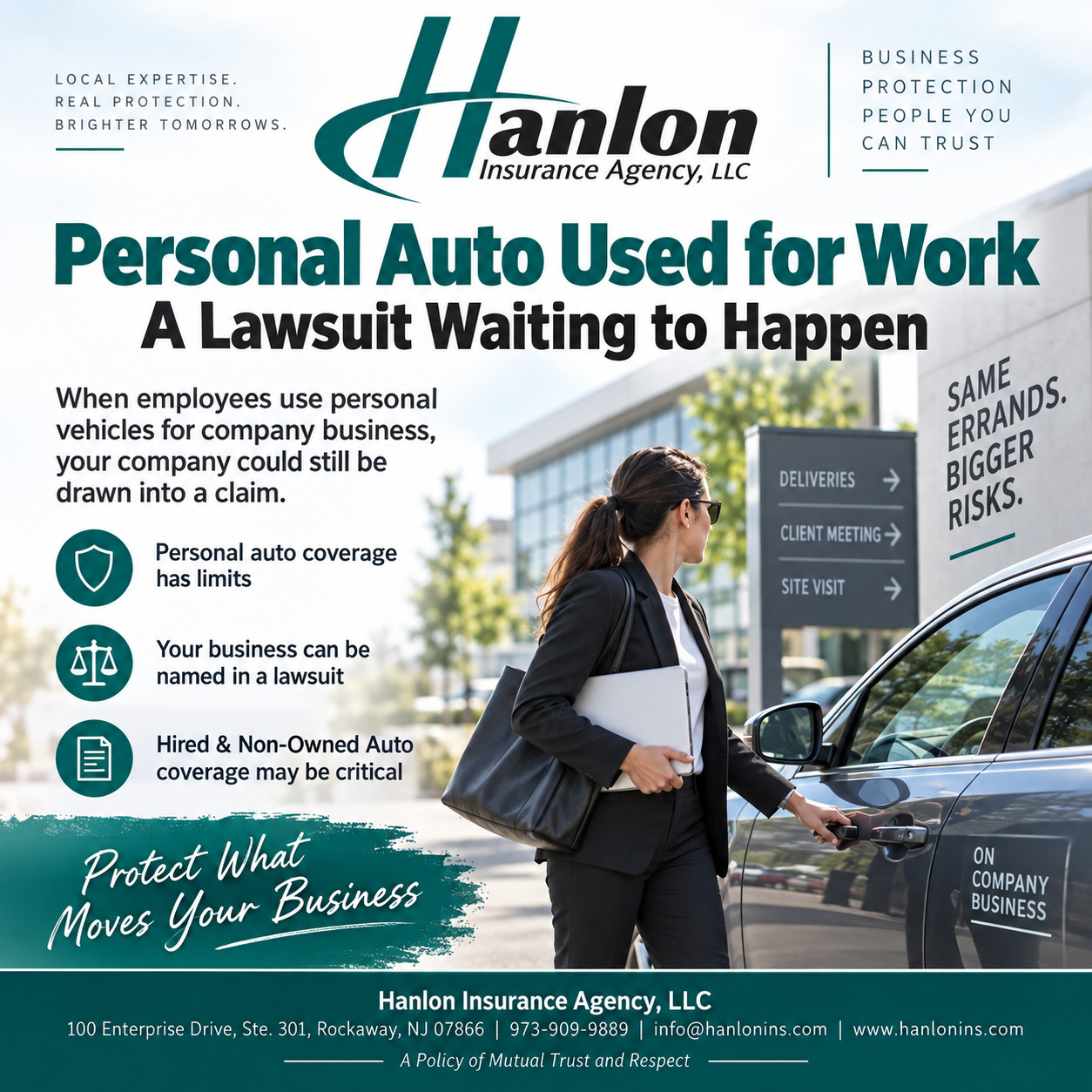
If employees run errands in their own cars, that’s a separate exposure. See Personal Auto Used for Work: What Business Owners Need to Know.
How Hanlon Insurance Agency Helps
Our executive officers hold the CPCU and CIC designations, bringing experienced guidance to commercial auto coverage, risk management, and coverage gap analysis. We review your commercial auto policy, driver list, and limits. We look for gaps such as hired and non-owned auto and umbrella coverage, and we help you put practical driver standards in writing.
Book a 15-Minute Insurance Consultation, or call or text us at (973) 909-9889.